
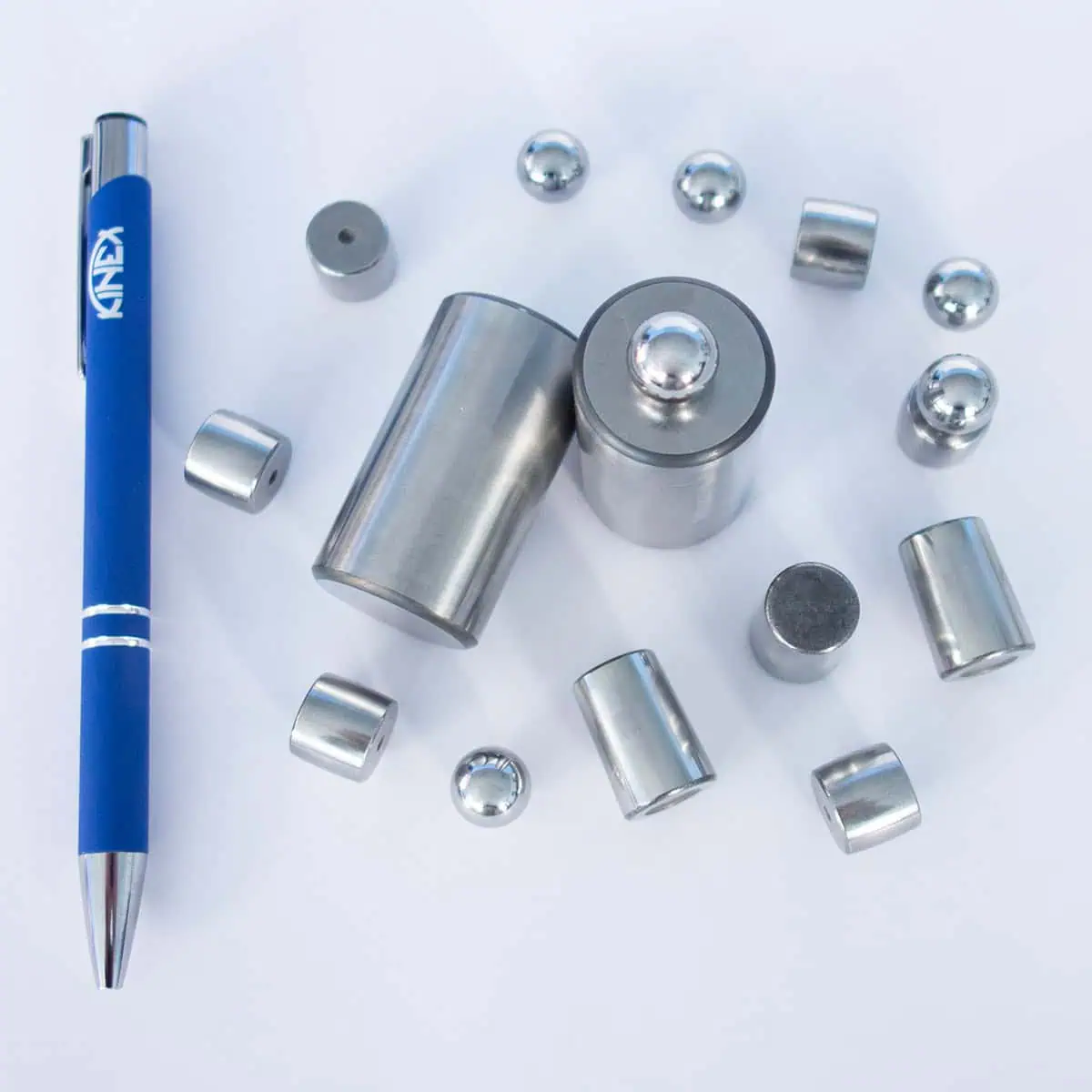
Introduction to Rolling Elements
Rolling elements in bearings are the foundation of every bearing. They reduce friction between moving parts, transmit loads, and determine the dynamic properties and load capacity of the bearing. The elements can be made of steel, ceramic, or hybrid materials, and the precision of these components directly affects the overall performance and reliability of the machines.
Types of Rolling Elements
Rolling elements are manufactured in several variants, each of which is suitable for different applications and technical requirements such as load capacities, speeds, operating conditions, etc.
Balls
Ball bearings are among the most widely used types of bearings. They use spherical rolling elements that ensure relatively high dynamic load capacity, smooth running, and low friction. They are ideal for combined loads and high-speed applications such as electric motors and various other devices.
Cylindrical Rollers
Cylindrical rollers offer a larger contact area, making them suitable for heavy radial loads. The design of these bearings is particularly advantageous when both rings are fixed.
Needle Rollers
Needle rollers are long and thin, enabling compact bearing designs that handle high loads with limited space.
Tapered Rollers
Tapered rollers manage both radial and axial loads efficiently, commonly used in automotive and railway industries, in heavy machinery, and similar applications.
Spherical Rollers
Spherical rollers allow for misalignment between shaft and housing, offering durability under vibration and shock loads.
Materials Used for Rolling Elements
Rolling elements come in several forms, each suited for different applications and load requirements.
Chrome Steel
The standard material for rolling elements, offering excellent hardness, fatigue life, and cost-effectiveness.
Stainless Steel
Provides superior corrosion resistance for humid or chemical environments. Common in food, medical, and marine applications.
Ceramic Rolling Elements
Silicon nitride and zirconia ceramics offer low density, high stiffness, and exceptional high-speed performance. They are also electrically insulating, making them ideal for hybrid bearings.
Hybrid Rolling Elements
Combining steel rings with ceramic balls, hybrid bearings deliver the best balance between strength, speed, and corrosion resistance.
Performance Factors Influenced by Rolling Elements
Friction and Efficiency
Precision-manufactured rolling elements minimize friction, improving efficiency and reducing energy consumption.
Load Capacity and Fatigue Life
Material strength and geometry directly influence bearing load ratings and fatigue resistance.
Noise and Vibration
Roundness, surface finish, and material uniformity determine the noise level and smoothness of operation.
Manufacturing and Quality Control
KINEX BEARINGS ensures each rolling element meets exact dimensional tolerances and surface quality through automated inspection and testing. This consistency guarantees high-speed performance and long service life in industrial and automotive applications.
Conclusion
Rolling elements are the foundation of bearing technology. By selecting the right type and material, engineers can optimize load capacity, precision, and reliability. KINEX BEARINGS continues to innovate in rolling element design to meet the demands of modern industries.
Frequently Asked Questions – Rolling Elements in Bearings
What are the main types of rolling elements?
Balls, cylindrical rollers, needle rollers, tapered rollers, and spherical rollers – each type is designed for specific load, speed and alignment requirements.
When should I choose ceramic rolling elements instead of steel?
Choose ceramic (e.g., silicon nitride) when you need higher speed capability, lower weight, electrical insulation, or improved wear/corrosion resistance – especially in hybrid designs.
How do rolling element materials affect bearing life?
Material properties (hardness, toughness, corrosion resistance) and surface finish directly influence fatigue life, wear rates, and resistance to contamination – all key determinants of bearing life.
Can rolling elements be reconditioned or repaired?
Rolling elements require high-precision surfaces; in most cases, replacing worn rolling elements is preferred to reconditioning. Reconditioning is only viable in specialized repair facilities for specific cases.
How do rolling elements influence noise and vibration?
Roundness, surface finish, and manufacturing tolerances of rolling elements govern vibration and noise levels; tighter tolerances and superior finishes yield quieter, smoother operation.